
 CZ
CZ
 DE
DE
 EN
EN
Refractory materials
and components
A complete range of refractory materials for industrial high-temperature applications, from shapes and castables to insulation materials and crucibles.
Refractory shapes
Industrial refractory shapes for the most demanding thermomechanical applications. They are divided into dense and insulating shapes.
Dense refractory shapes
Fireclay shapes
(Al₂O₃ content up to 41 %)

A reliable and economical solution for standard thermal loads. Suitable for stable processes without extreme thermal shocks.
- Applications: Chimneys, combustion chambers, biomass boilers and standard furnace linings.
- Temperature range: Typically up to 1 300 °C, depending on the type.
- Main advantage: Excellent value for money and good heat storage.
- Limitation: Lower resistance to strong chemical corrosion.
Typical variants:
- Standard fireclay
- Acidic fireclay
- Acid-resistant fireclay
- High-temperature fireclay
High-alumina shapes
(Al₂O₃ content above 45 %)

Materials for the most demanding industrial service. They withstand extreme loads, corrosion and aggressive chemical conditions.
- Applications: Foundries, steelworks, cement plants, ladle and blast-furnace linings.
- Temperature range: 1 400 °C to 1 700 °C and above.
- Main advantage: Outstanding mechanical and chemical resistance.
- Limitation: Higher purchase cost and greater weight.
Typical variants:
- Mullite shapes
- Andalusite shapes
- Bauxite shapes
- Corundum shapes
Insulating refractory shapes
Lightweight shapes with low thermal conductivity for insulating industrial furnaces and equipment. They are classified by raw material base and service temperature.

Naturally porous
(up to approx. 800 °C)An economical insulation solution for applications with lower thermal loads.
- Applications: Industrial furnaces, dryers and thermal channels.
- Temperature range: Up to approx. 800 °C.
- Main advantage: Low cost and easy machining.
Typical variants:
- Perlite
- Diatomite
- Liapor
With burn-out additive
(up to approx. 1 250 °C)They combine good insulation with increased temperature resistance through optimized porosity.
- Applications: Industrial furnaces, boilers and thermal equipment.
- Temperature range: Up to approx. 1 250 °C.
- Main advantage: A good balance of insulation and strength.
Typical variants:
- Foam fireclay
- Spherolite
High-alumina insulation
(1 250–1 650 °C)For the most demanding insulation applications: maximum temperature stability with minimal thermal conductivity.
- Applications: Metallurgical furnaces, cement plants and glassmaking equipment.
- Temperature range: 1 250 to 1 650 °C.
- Main advantage: Extreme temperature resistance at low weight.
Typical variants:
- Mullite insulation
- Corundum insulation
- Corundum with a fibrous phase
Refractory masses
Monolithic refractory masses for lining and repairing industrial furnaces, heaters and thermal equipment.
Dense castables
Castables are generally classified by alumina cement content and, by aggregate, as shale, andalusite, bauxite, corundum, quartz-glass, cordierite and other grades.
Typical application: Contact material for furnace atmospheres, molten and heated metals, and incinerated waste.
Insulating castables
Insulating castables are generally identified by maximum service temperature, bulk density and, where relevant, raw material base.
Typical application: Thermal insulation of steel structures in thermal equipment, as both insulating and contact lining.
Repair and shotcrete castables
Repair castables have tailored thixotropy, improved bonding properties and adhesion to substrates. They are applied with a spatula, trowel or shotcrete machine.
Chemically bonded castables
Designed especially for rapid furnace-lining repairs. The dry component is mixed with a liquid activator and minimal water, reacting exothermically into a refractory product.
Typical application: Aluminium foundry furnaces.
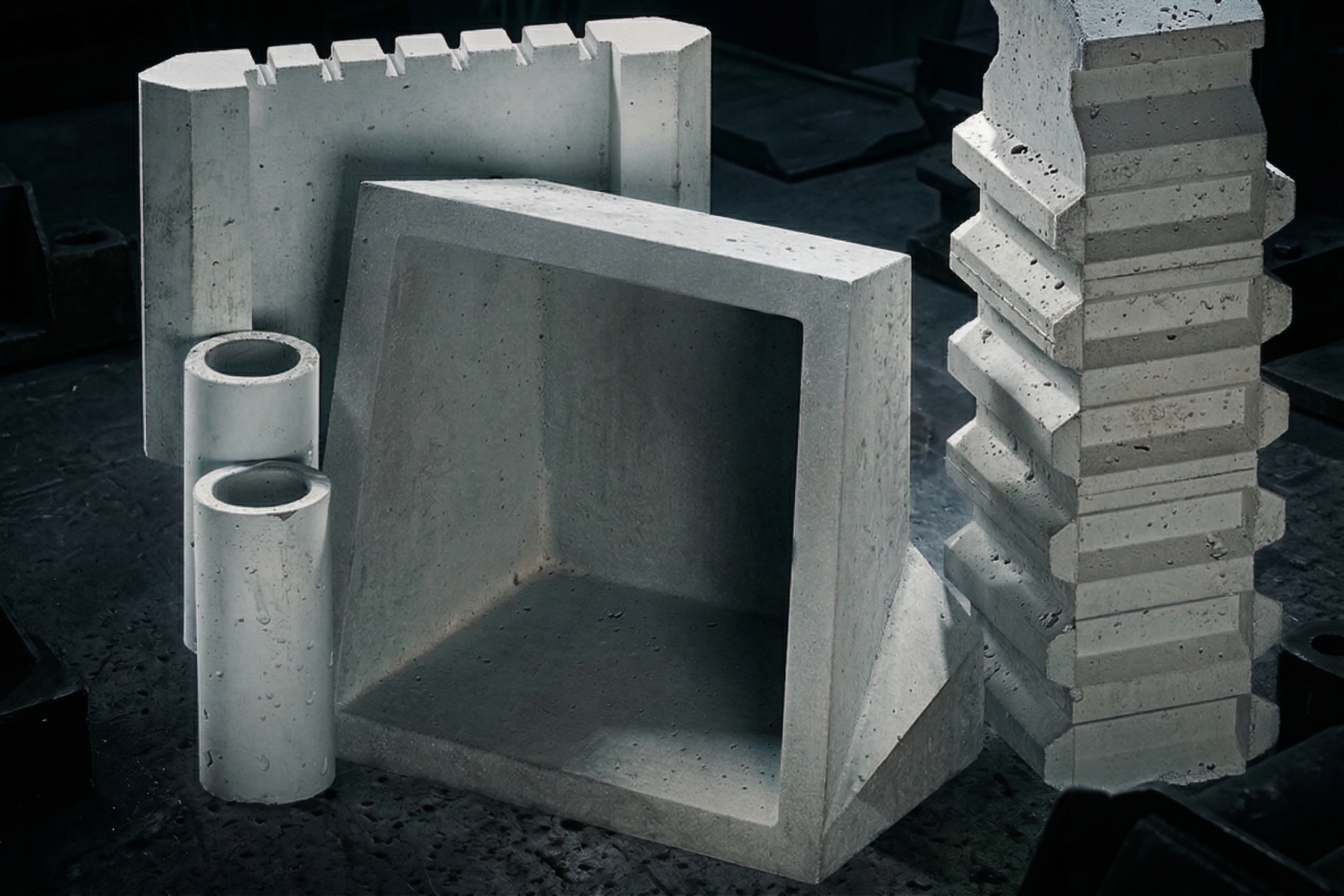
Precast refractory concrete
In-house production of precast refractory concrete from newly developed castables, with guaranteed quality through individual weighing of raw materials for each product.
Precast refractory concrete is used mainly as equipment for melting and holding furnaces in aluminium foundries, especially for furnaces made by:
Compatibility with furnace manufacturers
- Striko
- Striko-Westofen
- ZPF
- Insertec
- Crown
- DEL
Castables based on high-alumina and special aggregates are also suited to other industries thanks to their excellent thermal, physico-chemical and corrosion-resistant properties:
- Waste incinerators
- Ferrous and non-ferrous metallurgy
- Energy
- Stove and kiln equipment
Precast production is closely linked to manufacturing complexly shaped moulds. Their design and manufacture are carried out in long-term, flexible cooperation with suppliers.
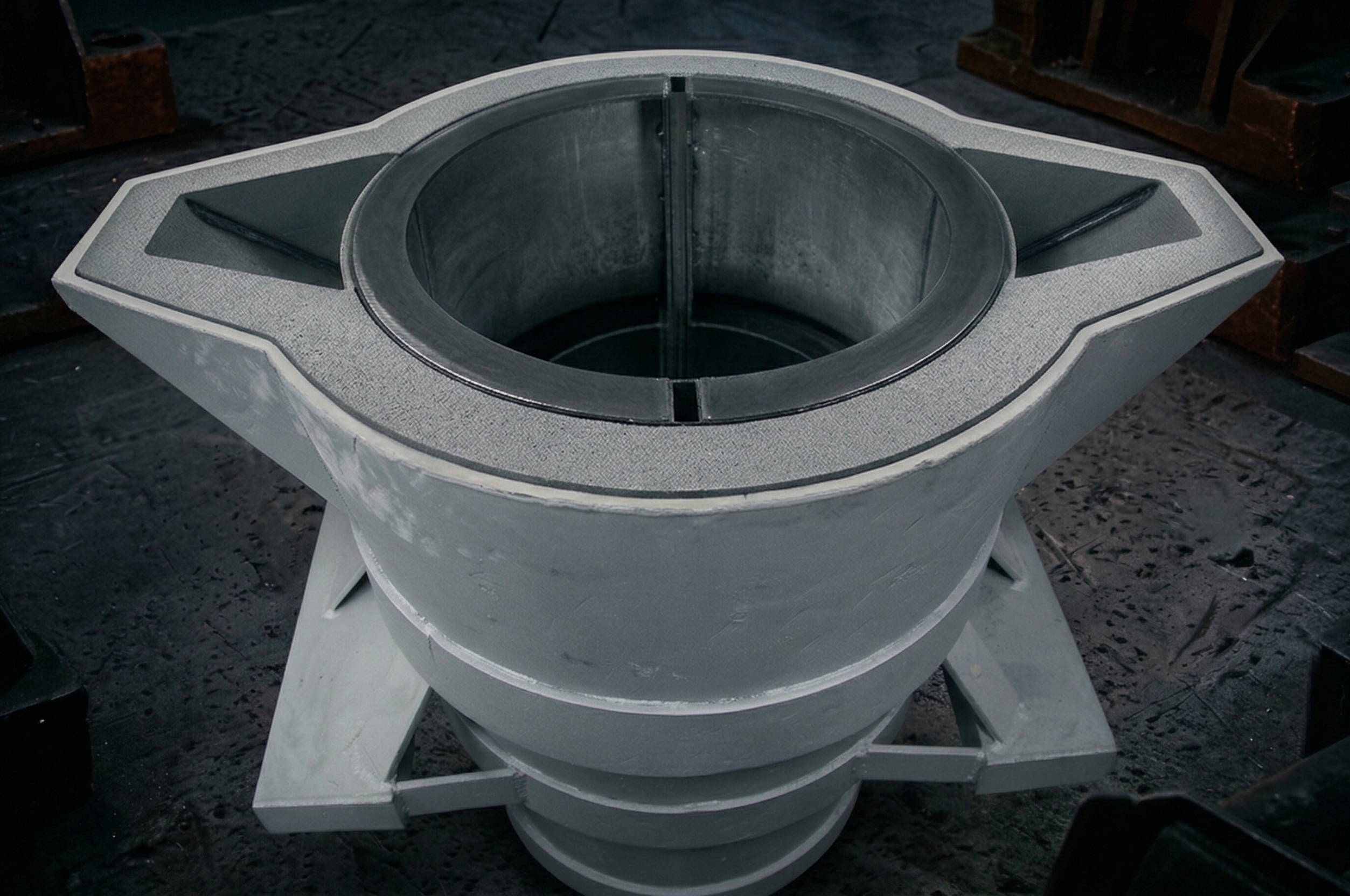
SiC and clay-graphite crucibles
Isostatically pressed SiC and clay-graphite products from the renowned German manufacturer Mammut-Wetro, produced directly in Germany. Quality is backed by more than 20 years of cooperation and a strong position in the Czech and Slovak markets.

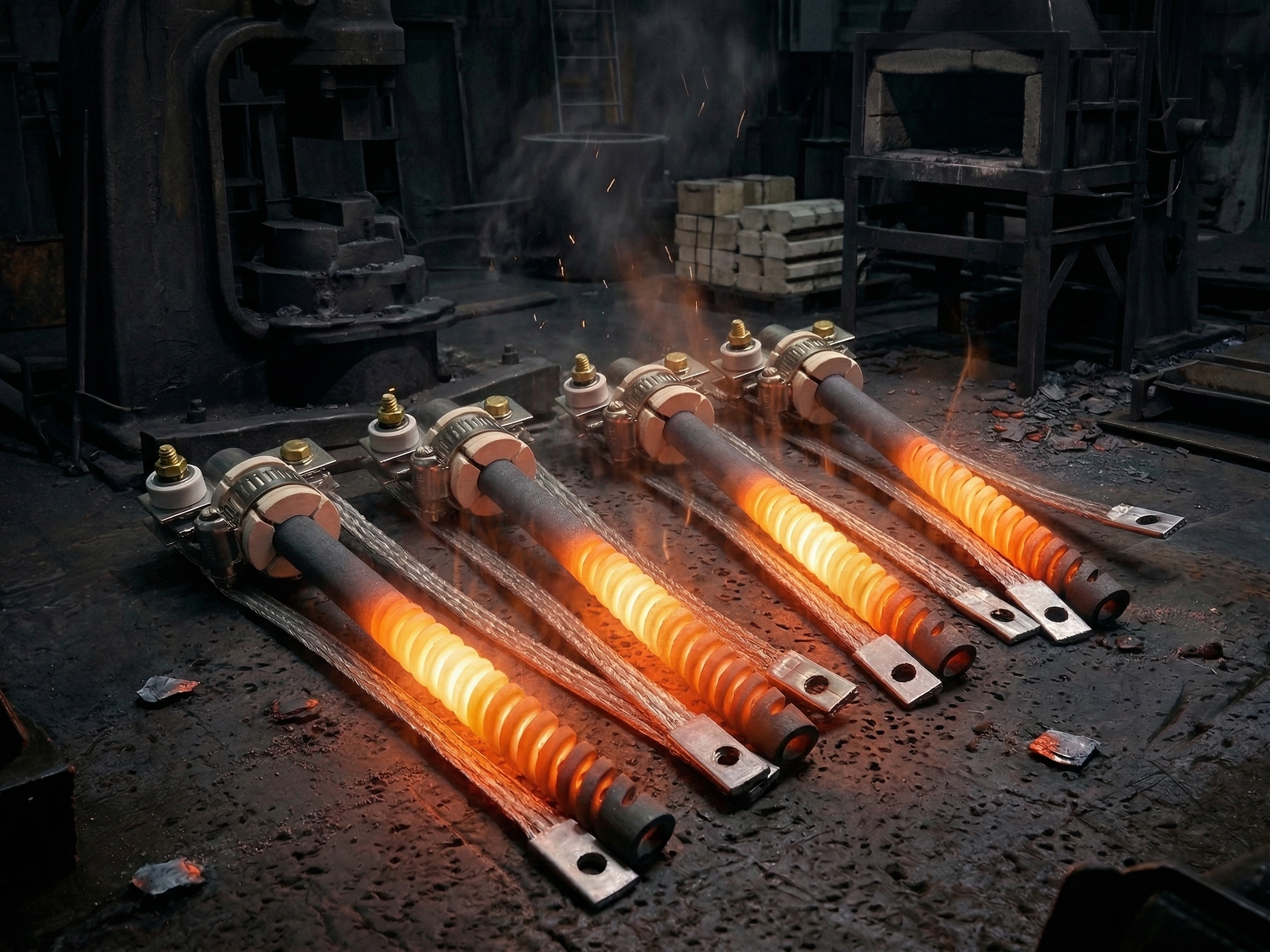
Heating rods for electric resistance furnaces
Silicon carbide heating rods based on Si-SiC for electric resistance furnaces. Stock available in the Czech Republic.
We supply customers with silicon carbide rods (based on Si-SiC) for electric resistance furnaces.
Stock formats available in the Czech Republic
Fibrous and calcium silicate
microporous insulation materials
Modern insulation materials with excellent thermal insulation properties for industrial heaters, furnaces and high-temperature equipment.
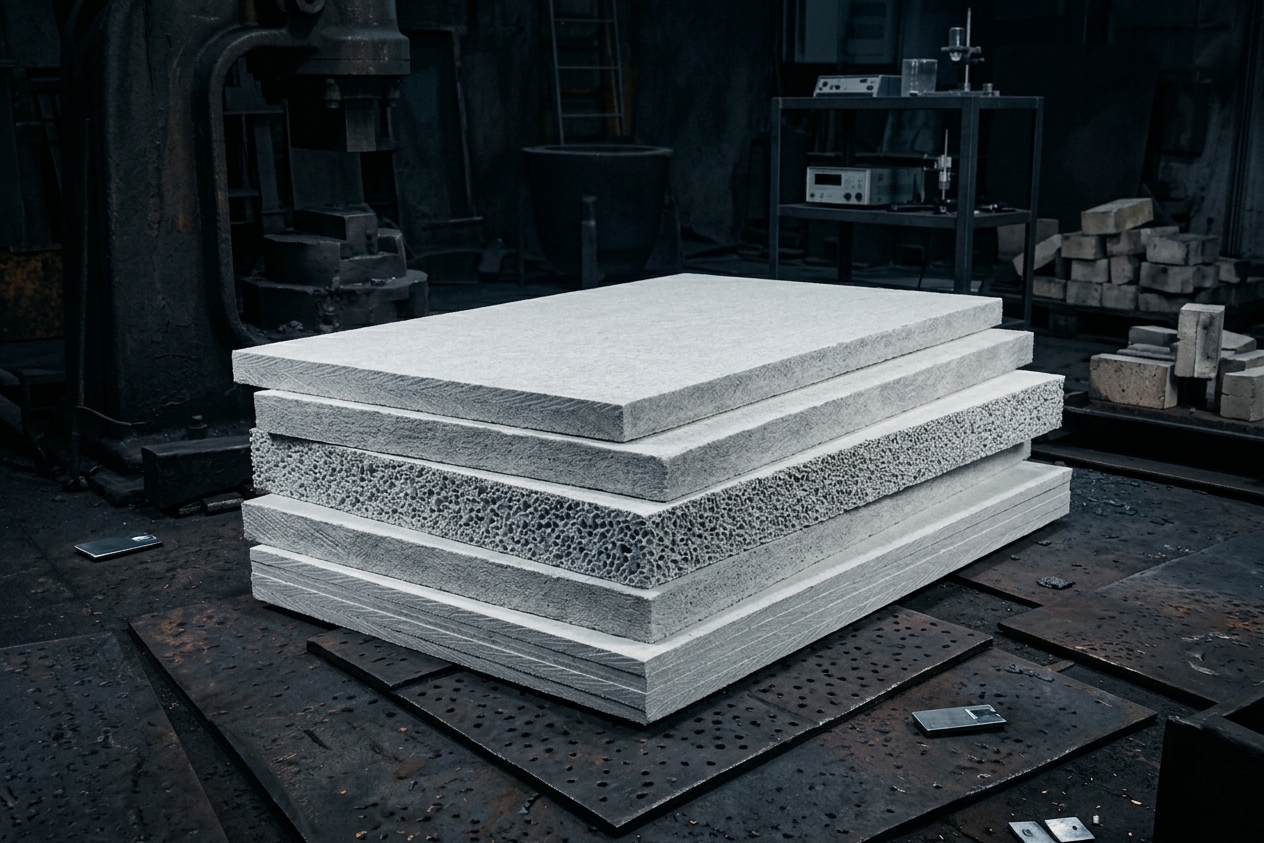
Fibrous materials
Mats, boards, felts (papers) and vacuum-formed shapes made from ceramic or biogenic fibre soluble in body fluids, providing a better health classification in safety data sheets.
Calcium silicate boards
Calcium silicate boards can also be used for launders and distributors in direct contact with aluminium.
Microporous boards
Microporous boards are highly effective wherever temperature must be reduced within the narrowest possible lining profile. Available reinforced with glass textile or wrapped in aluminium foil to protect against condensation from the furnace atmosphere.
Wear-resistant linings
For cold, thermally unloaded applications requiring exceptional wear resistance and long service life.
We supply wear-resistant linings based on fired corundum shapes, including the necessary adhesives and mortars.
Proven solution
This solution has proven effective for lining blast-furnace hoppers at the sinter charging point.
Interested in a specific product?
Contact us for technical advice, quotations or material samples. We will be happy to help you choose the optimum solution.